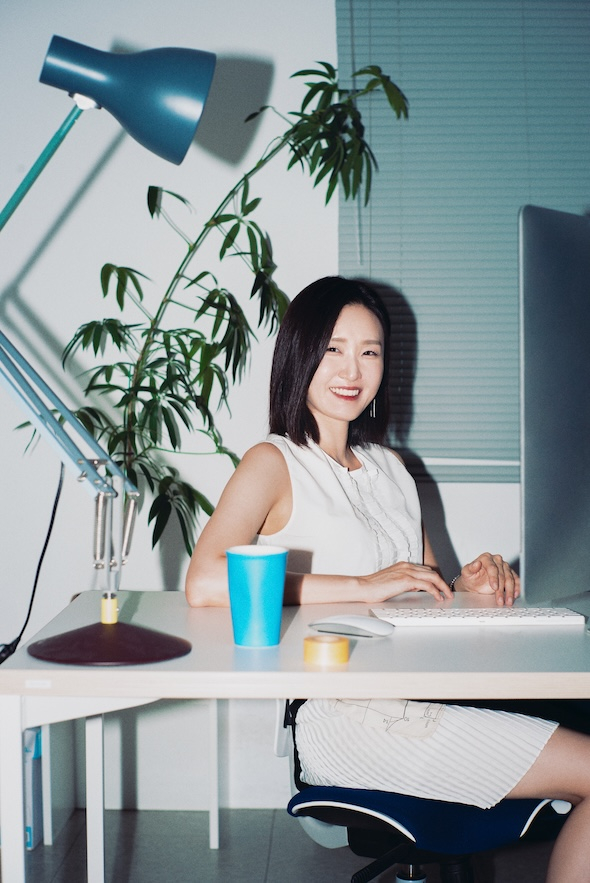
Ms. Sun Min Joo - Project Lead, Seoul Fashion Week Beauty & Fashion Industry Division Seoul Metropolitan Government
Portrait Ms. Sun Min Joo - Photo credit ® Sun Min Joo
Questions conceived and hosted by Florian Müller
MODEM:
Before fashion became the field through which you influence an entire industry, economics, commerce, and public service each shaped different stages of your professional journey. How would you explain the fashion industry today to someone from outside it?
Ms. SUN MIN JOO:
Many people still view fashion primarily through the lens of runway shows and fast-moving trends. Having spent years working across economics, commerce, and public policy, I see fashion as a far more complex and essential industry. Fashion is fundamentally an interconnected system, where creative vision, manufacturing expertise, commercial networks, and institutional arrangements must work together. Creative ideas alone cannot create lasting impact; they must be supported by the capabilities and structures that allow them to reach global markets. True competitiveness comes from bridging local craftsmanship with international opportunities, and transforming creative energy into enduring business value.
MODEM:
Few fashion weeks operate within a public framework while serving an international creative industry at the same time. Which opportunities does this position create that might be difficult to achieve through a purely commercial model?
Ms. SUN MIN JOO:
The greatest advantage of a public platform is its ability to look beyond immediate seasonal outcomes and invest in the long-term development of the industry. Seoul Fashion Week uses its public foundation to bring together diverse stakeholders - from emerging designers and local manufacturing networks to international buyers and retail partners - creating opportunities that require collaboration across the entire fashion field. Our role is not to replace the market, but to complement it by creating pathways for new talent, strengthening industry capabilities, and building international partnerships that can grow over time.
MODEM:
Seoul Fashion Week increasingly connects designers with manufacturers, buyers, retailers, and cultural institutions instead of presenting collections in isolation. At what point does a fashion week become an ecosystem rather than just an event?
Ms. SUN MIN JOO:
Fashion week becomes an integrated structure when it evolves from a temporary showcase into a continuous platform for growth and collaboration. A runway presentation is only the beginning. A true framework emerges when creative ideas are connected with production capabilities, commercial opportunities, and global connections - allowing designers to transform their vision into meaningful business outcomes. Seoul Fashion Week plays this role by connecting design talent with Seoul’s strong manufacturing, retail, and creative infrastructures. Success is not measured by the attention generated during a single week, but by the partnerships, opportunities, and industry growth that continue throughout the year.
MODEM:
International recognition of Korean fashion continues to grow alongside global interest in Korean culture. Which contributions within this network deserve far greater recognition than they usually receive, beyond the global attention already directed towards it?
Ms. SUN MIN JOO:
When the world looks at K-fashion, it often sees global artists, visionary designers, and the creativity presented on international stages. However, the strength of Korean fashion is also built upon a foundation that receives far less attention. One of the most important contributors is Seoul’s urban manufacturing base and the skilled professionals who bring creative ideas into reality. Their expertise, precision, and adaptability allow designers to respond quickly to global markets while maintaining high standards of quality. Another essential element is the institutional landscape and industry partners that support emerging talent. By connecting designers with production capabilities, international buyers, and new business opportunities, this form helps creative ideas develop into sustainable global brands. K-fashion’s future will depend not only on the visibility of those on the stage, but also on recognizing and strengthening the people and structures that make that creativity possible.
MODEM:
During periods of structural change, institutions often depend on people who quietly preserve stability while everything around them may be changing. Does leadership sometimes reveal itself most clearly when almost nobody notices it?
Ms. SUN MIN JOO:
I believe leadership is often revealed most clearly during periods of transition - especially when an organization needs stability, sound judgment, and quiet responsibility behind the scenes. Through my experience leading Seoul Fashion Week through a period of transition and establishing a more stable operational outline, I learned that change is not simply about introducing a new direction. It is equally about protecting the institution’s core purpose and ensuring that its systems, relationships, and values continue to move forward. During such moments, many of the most important responsibilities are not visible from the outside. Maintaining a clear sense of direction, aligning diverse stakeholders, and ensuring that the organization remains true to its mission require patience, consistency, and commitment. To me, leadership is not measured by the attention one receives, but by the ability to create stability and continuity so that the people and surrounding environment around the organization can continue to grow and progress.
MODEM:
The relationship between celebrities and fashion is nothing new. How would you explain that Seoul Fashion Week is now so closely associated with K-Pop internationally?
Ms. SUN MIN JOO:
The connection between fashion and pop culture is certainly not new. What makes Seoul unique, however, is that this relationship goes far beyond traditional endorsement or simple brand ambassadorship. Rather than simply leveraging celebrity visibility, Seoul’s creative scenery brings music, fashion, and visual storytelling together as a shared cultural experience. K-Pop artists are not simply wearing the clothes; they speak the same creative language as our designers - expressing identity, mood, and narrative through a common visual expression. Through this collaboration, K-Pop serves as a powerful bridge, introducing the distinct creativity of Seoul’s designers to audiences around the world. The connection is not about using fame for short-term exposure. It is about two vibrant creative fields inspiring each other, creating new cultural value, and growing together.
MODEM:
Many concerns within fashion continue to revolve around visibility, pressure, and constant performance . From your perspective, which changes in the way people throughout the industry are treated and supported are long overdue?
Ms. SUN MIN JOO:
The most overdue change is shifting from a culture of constant extraction to one of sustainable growth. Fashion is built on human talent - designers, skilled artisans, and operational teams - yet the industry must move beyond viewing people primarily as resources for immediate output. In a field driven by relentless speed and high visibility, meaningful support means creating predictable working environments, fair evaluation systems, and pathways for long-term career development. We cannot expect world-class innovation without creating the conditions that allow talent to grow and remain engaged. Long-term competitiveness does not come from pushing people to their limits. It comes from building a resilient setup where the creative process is valued as much as the final product, and where people can grow together with the industry.
MODEM:
Conversations around wellbeing and mental health are becoming increasingly prominent across the international fashion industry. If care were seen as part of professional excellence, not an individual responsibility, where could meaningful change begin?
Ms. SUN MIN JOO:
Meaningful change begins when leadership stops viewing wellbeing and mental health as personal issues and starts recognizing them as organizational responsibilities.True professional excellence cannot exist without psychological safety. In a highly creative industry, pressure is inevitable, but when people do not feel safe to express challenges, seek support, or take necessary time to recover, creativity is often the first thing affected. Leaders must create environments where care is embedded into everyday operations - not as an exception, but as part of how teams work, collaborate, and grow. A sustainable fashion industry is built not only on exceptional products, but on the people who create them. Protecting and empowering those individuals is the foundation for lasting creativity and excellence
MODEM:
Looking at the wider fashion landscape, what would a healthier culture look like in practice, not just in words?
Ms. SUN MIN JOO:
A healthier fashion culture, in practice, is one where growth is not measured only by speed, scale, or visibility, but by the quality and long-term value we create. The fashion industry has always been driven by change, but the challenge today is finding the right balance between speed and depth. While innovation and efficiency are essential, we must also preserve the creativity, craftsmanship, and thoughtful processes that give fashion its lasting value. Technology, including AI and digital innovation, should help the industry move forward in a smarter way - not simply accelerate production and consumption. It should create more space for creativity, collaboration, and meaningful decision-making. At the same time, sustainable growth requires looking beyond short-term performance and considering the long-term health of the entire system. For me, a healthier fashion culture is one that embraces innovation while remaining committed to creativity, responsibility, and lasting value.
MODEM:
In addition to its traditional elements, Seoul Fashion Week has developed a highly distinctive structure through its connection with K-Pop and the Korean beauty industry. Without wanting to copy you, what could other fashion capitals learn from your approach?
Ms. SUN MIN JOO:
What other fashion capitals can learn from Seoul is not about replicating K-Pop or K-Beauty. It is about how to build a dynamic platform where different cultural elements genuinely reinforce one another. Traditionally, fashion weeks have primarily served as industry platforms connecting designers, buyers, and media. Seoul has expanded that perspective by connecting fashion with music, beauty, entertainment, and the city’s broader cultural energy - creating a more immersive experience that engages global audiences. The key lesson is not to copy another city’s formula, but for each fashion capital to identify its own unique cultural identity - whether through fine art, street culture, design, or local craftsmanship - and weave those elements into a cohesive story. Fashion becomes more powerful when it moves beyond operating in isolation and becomes part of a city’s wider creative ecosystem.